Pride is one of those words that feels familiar until you stop and sit with it. Most people don’t wake up thinking, I’m proud. Pride usually sounds like arrogance, loud confidence, or someone who talks too much about themselves. Because of that, many people assume pride is easy to identify and easy to avoid.
But when the Bible speaks about pride, it is talking about something deeper and far more subtle.
That is why the question matters: what does pride mean in the Bible?
Scripture does not treat pride as a personality flaw or a social weakness. It treats pride as a heart posture. Something internal. Something that quietly shapes how a person relates to God, how they respond to correction, and how they see others.
Pride in the Bible is rarely obvious at first. It often looks reasonable. It can even look responsible or mature. That is why it can live in people who are sincere, hardworking, and religious.
The Bible warns about pride not to shame people, but because pride slowly changes the direction of the heart. And once the heart’s direction shifts, everything else follows.
The short and clear answer
So, what does pride mean in the Bible?
In simple terms, biblical pride means lifting yourself into a place that belongs to God.
It is an inner attitude that says, sometimes without words, I can handle this on my own. It trusts personal judgment more than God’s wisdom. It leans on self instead of leaning on Him.
This kind of pride does not always show up as bragging or arrogance. Often, it shows up as self-reliance. Quiet independence. A habit of deciding without praying. A resistance to correction.
In the Bible, pride is not measured by how confident someone appears, but by where their trust rests.
Why the Bible takes pride so seriously
The Bible speaks strongly about pride because pride closes things off.
A proud heart does not listen well.
It explains instead of learning.
It defends instead of reflecting.
Over time, prayer becomes less natural. Repentance becomes uncomfortable. Correction feels unnecessary or even insulting.
This is why pride is often listed alongside spiritual danger in Scripture. Not because God is fragile or easily offended, but because pride slowly cuts a person off from the very things that keep the heart alive.
The Bible shows that pride rarely ruins a life in one moment. Instead, it works quietly. It convinces a person they are right long before they are wise.
What pride is not
One reason pride is misunderstood is because it is often confused with things it is not.
Biblical pride is not confidence.
It is not knowing your strengths.
It is not leadership or responsibility.
It is not gratitude for progress or growth.
The Bible does not ask people to deny reality or pretend they are incapable. Humility is not self-hatred. God does not call people to shrink themselves.
The problem is not recognizing ability. The problem is trusting ability more than God.
This distinction is important for anyone trying to understand pride in the Bible honestly.
What pride looks like in everyday life
When Scripture describes pride, it often uses language about being “lifted up” inwardly. Pride is not always loud. Often, it is quiet and internal.
Pride shows up when decisions are made without prayer.
When advice feels irritating instead of helpful.
When correction sounds like disrespect.
Sometimes pride says, I already know this.
Sometimes it says, I don’t need help.
Sometimes it says nothing at all and just keeps moving.
Biblical pride does not always push God away aggressively. Often, it simply forgets to include Him.
That is why pride can exist alongside faith activity. A person can pray, serve, and read Scripture, yet still operate from self-rule rather than trust.
Pride and self-rule in the Bible
One of the clearest biblical meanings of pride is self-rule.
Self-rule is not rebellion. It is independence without reference. It is planning first and praying later. Acting quickly and reflecting slowly.
For a while, self-rule can look effective. That is what makes it dangerous.
When life goes well, self-rule feels justified. But over time, it trains the heart to function without God. Prayer becomes optional. Repentance feels unnecessary. Gratitude fades into habit.
In the Bible, pride is dangerous not because it fails immediately, but because it succeeds without God.
Pride and comparison
Another strong biblical theme connected to pride is comparison.
Pride measures worth by comparison.
It notices faults quickly.
It struggles to rejoice when others are praised.
Comparison often looks like insecurity, but the heart is still centered on self. Whether feeling above others or beneath them, pride keeps attention inward.
The Bible does not separate pride into “loud pride” and “quiet pride.” Both keep the heart curved toward itself instead of open toward God.
Why pride is hard to see in ourselves
Pride rarely feels sinful at the beginning.
It feels justified.
It feels reasonable.
It feels earned.
This is why Scripture often connects pride with blindness. Not because proud people are unintelligent, but because pride narrows vision.
A proud heart hears warning as criticism.
It hears truth as attack.
It hears correction as threat.
Humility, in contrast, is not weakness. In the Bible, humility is clarity. It allows a person to see themselves honestly before God.
What pride produces over time
Pride usually begins with small, unnoticed moments.
A choice made without prayer.
A correction brushed aside.
A habit of assuming understanding.
Over time, these moments form direction.
Pride isolates. It teaches the heart to defend instead of listen. To justify instead of confess. To explain instead of repent.
This is why Scripture warns about pride repeatedly. Not to scare people, but to protect them.
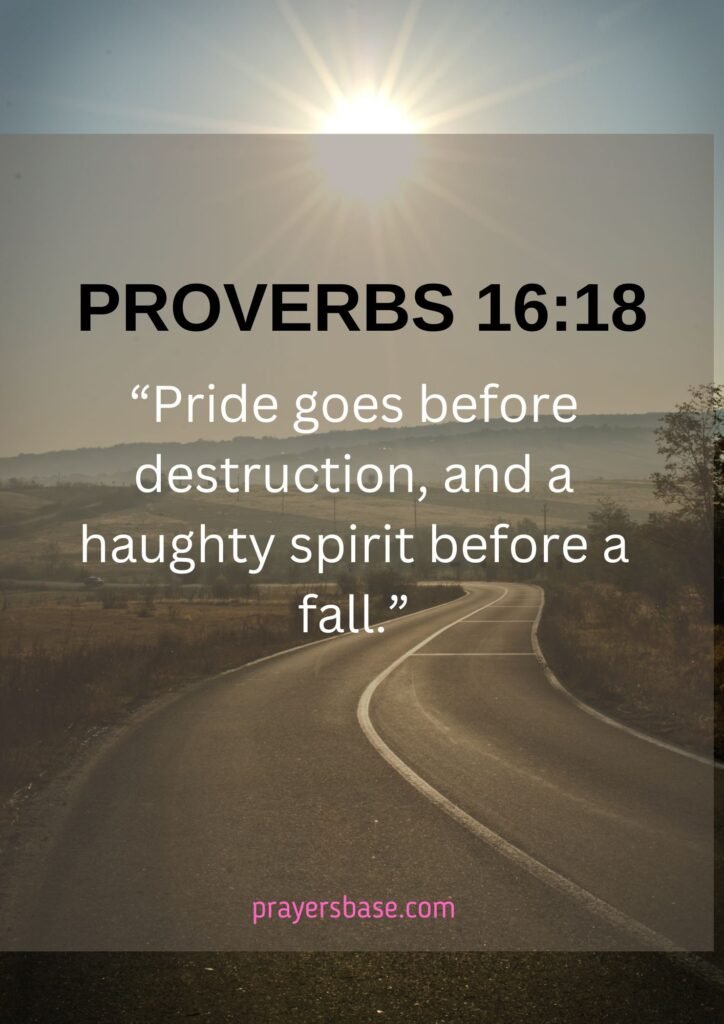
“Pride goeth before destruction” read slowly
One of the clearest biblical statements about pride appears in the book of Proverbs:
“Pride goeth before destruction, and an haughty spirit before a fall.”
This verse is often quoted harshly, but it reads more clearly as an observation.
Pride removes safeguards.
It silences warnings.
It overestimates control.
The fall does not come suddenly. It follows many ignored moments.
The verse is not meant to shame. It is meant to wake the heart up before damage sets in.
How pride shows up today
Pride today often looks ordinary.
Always needing to be right.
Speaking more than listening.
Living prayerless, not from rebellion, but from busyness.
Avoiding apologies because they feel uncomfortable.
Spiritual pride can be especially subtle. It uses faith language. It compares knowledge. It measures others quietly.
The Bible exposes pride wherever the heart lifts itself above God, even when it hides behind good behavior.
A Gentle heart check
Scripture invites honesty, not self-attack.
It helps to ask quietly:
Do I listen well?
Do I pause when corrected?
Do I pray before deciding, or only when things break?
Am I more concerned with being right or being shaped?
These questions are not accusations. They are invitations to clarity.
Pride and humility side by side
The Bible presents humility as truth, not insecurity.
God is God.
I am not.
Humility stays teachable.
Humility listens.
Humility trusts instead of controls.
Where pride tightens, humility softens.
Where pride reacts, humility reflects.
Humility creates space for peace, growth, and grace.
Turning away from pride
Repentance from pride is usually quiet.
It looks like admitting without defending.
Listening without interrupting.
Choosing obedience over image.
God responds quickly to humility, not because humility earns favor, but because it opens the heart to receive it.
What the Bible keeps showing us
Scripture does not honor people who never fail. It honors people who return honestly.
Those who humble themselves after failure find mercy. Those who protect pride grow hard.
God is not drawn to self-protection. He is drawn to truth.
Bringing it all together
So, what does pride mean in the Bible?
It means lifting the self into a place where only God belongs.
Pride feels strong, but it weakens the heart.
Humility feels costly, but it brings rest.
The Bible warns about pride because it slowly pulls the heart away from life with God.
Humility brings us back — gently, steadily, honestly.
Closing prayer
Gracious God,
we come before You knowing how easily pride hides in us. Show us where we rely on ourselves instead of trusting You. Teach us to listen, to soften, and to return quickly when we drift. Shape our hearts so they stay open before You. Amen.
Frequently Asked Questions About Pride in the Bible
What does pride mean in the Bible in simple words?
In simple terms, pride in the Bible means putting yourself where God should be. It is an inner attitude that relies on self instead of trusting God. Pride does not always look loud or arrogant. Often, it shows up as quiet self-reliance, resistance to correction, or living as though prayer is optional.
Is pride always a sin in the Bible?
The Bible consistently warns against pride because it describes a heart posture that pushes God aside. Biblical pride is different from healthy confidence or gratitude. Pride becomes sinful when it replaces dependence on God with trust in self, or when it leads a person to look down on others.
What is the difference between pride and confidence in the Bible?
Confidence in the Bible is rooted in God and remains teachable. Pride is rooted in self and resists correction. A confident person can admit weakness and still trust God. A proud person struggles to listen, repent, or accept guidance, even when it is needed.
Can insecurity also be a form of pride?
Yes, it can. While insecurity looks different from arrogance, both can be self-focused. Insecurity can still center the heart on self, constantly comparing, measuring, or seeking validation. Biblical humility shifts focus away from self altogether and places trust in God.
Why does the Bible say pride leads to destruction?
The Bible says pride leads to destruction because pride removes safeguards. It silences correction, ignores warning signs, and overestimates control. Destruction does not usually come suddenly. It follows many small decisions where pride prevents a person from listening, repenting, or depending on God.
What are common signs of pride according to the Bible?
Common biblical signs of pride include difficulty accepting correction, prayerlessness, needing to always be right, resisting apology, and comparing oneself to others. Pride can also appear as spiritual pride, where faith knowledge or religious behavior becomes a source of superiority instead of humility.
How does the Bible define humility in contrast to pride?
In the Bible, humility is truth, not self-hatred. Humility recognizes that God is God and we are not. It stays teachable, listens well, repents quickly, and trusts God rather than trying to control everything. Where pride hardens the heart, humility softens it.
How can someone overcome pride according to the Bible?
Overcoming pride in the Bible begins with honesty before God. It involves admitting pride without excuses, returning to prayer, welcoming correction, and choosing obedience over image. Scripture shows that God responds quickly to humility because humility opens the heart to grace.