When life is loud, love is steady. When circumstances shift, faithfulness stays.
The Psalms sing those truths until our hearts can hum along.
If you’re longing for a way back to peace or a way forward with courage, these twenty-five passages will help you slow down, breathe, and remember who God is.
Each section offers a simple reflection to help you carry God’s Word into your day.
Psalms of God’s Steadfast Love
The Hebrew word often translated steadfast love (ḥesed) means covenant loyalty, love that won’t walk away. These Psalms pull our eyes off regret and back onto grace that stays.
1) Mercy for a fresh start: Psalm 136:1
“O give thanks unto the LORD; for he is good: for his mercy endureth for ever.”
Mercy isn’t a coupon that expires; it’s the character of God. If you feel behind before the day even begins, this verse invites a reset built on who He is, not who you’ve been. Gratitude becomes your first step—thankfulness not for perfect circumstances, but for a perfect love that outlasts every detour.
Start here, and let “endureth for ever” be the drumbeat that paces your day.
2) Kindness stronger than shame: Psalm 103:8–12
“The LORD is merciful and gracious, slow to anger, and plenteous in mercy.
He will not always chide: neither will he keep his anger for ever.
He hath not dealt with us after our sins; nor rewarded us according to our iniquities.
For as the heaven is high above the earth, so great is his mercy toward them that fear him.
As far as the east is from the west, so far hath he removed our transgressions from us.”
Shame says, “Hide.” God says, “Come near.” Honesty in His presence does not crush you; it cleanses you. “East from west” is poetic infinity—your forgiven past is not circling back.
When old accusations try to collect, point them to this measurement: immeasurable mercy, incalculable distance, and a Father who keeps no running tab on what He has already removed.
3) Love better than life: Psalm 63:3–4
“Because thy lovingkindness is better than life, my lips shall praise thee.
Thus will I bless thee while I live: I will lift up my hands in thy name.”
Some days are sweet; some are sour. God’s love is better than both. Praise isn’t denial; it’s orientation.
When you bless God “while you live,” you are training your soul to locate true north—God’s faithful presence—regardless of the weather in your heart.
Lift your hands, even if your feelings lag; your posture can preach to your emotions.
4) Big love, safe refuge: Psalm 36:5–7
“Thy mercy, O LORD, is in the heavens; and thy faithfulness reacheth unto the clouds.
Thy righteousness is like the great mountains; thy judgments are a great deep: O LORD, thou preservest man and beast.
How excellent is thy lovingkindness, O God! therefore the children of men put their trust under the shadow of thy wings.”
Worry narrows the horizon; this Psalm stretches it. Trace the height (heavens), the reach (clouds), the strength (mountains), the depth (great deep).
Then notice where all that grandeur leads: to shelter. The universe-sized God offers a wing-shadow close enough to rest in. Trust is practical—come out of the mental storm and sit in the shade of His love.
5) A fixed heart that sings: Psalm 108:1–4
“O God, my heart is fixed; I will sing and give praise, even with my glory.
Awake, psaltery and harp: I myself will awake early.
I will praise thee, O LORD, among the people: and I will sing praises unto thee among the nations.
For thy mercy is great above the heavens: and thy truth reacheth unto the clouds.”
Fear wants the last word; faith answers with a song. “My heart is fixed” is not stubbornness but anchor. Before problems parade their headlines, awaken praise. Early. Aloud. Not because life is easy, but because God is steady.
Singing here is not performance; it’s resistance—your declaration that mercy and truth stand taller than whatever you face.
Psalms of Faithfulness in Hard Times
God doesn’t just send a map through valleys, He walks with you. These Psalms trade panic for presence and turn long nights into places where hope learns endurance.
6) The Shepherd who restores: Psalm 23:1–4
“The LORD is my shepherd; I shall not want.
He maketh me to lie down in green pastures: he leadeth me beside the still waters.
He restoreth my soul: he leadeth me in the paths of righteousness for his name’s sake.
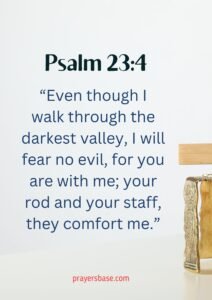
Yea, though I walk through the valley of the shadow of death, I will fear no evil: for thou art with me; thy rod and thy staff they comfort me.”
When your soul feels thin, the Shepherd doesn’t scold—He restores. Notice the verbs: maketh, leadeth, restoreth. He does the heavy lifting. Even in “shadow” valleys, the presence of God adjusts the atmosphere.
Fear loses its microphone when “thou art with me” fills the room. Let still water slow your breathing; let His rod and staff re-steady your steps.
7) A song in the night: Psalm 42:8
“Yet the LORD will command his lovingkindness in the daytime, and in the night his song shall be with me, and my prayer unto the God of my life.”
Daytime brings duties; nighttime brings thoughts. This verse pairs both with God’s care: lovingkindness by day, a song by night. If darkness exaggerates your fears, borrow Heaven’s melody. Hum one line. Repeat one truth.
Your prayer doesn’t have to be eloquent; it just needs to be honest to the “God of my life.”
8) Loved, guarded, delivered: Psalm 91:14–16
“Because he hath set his love upon me, therefore will I deliver him: I will set him on high, because he hath known my name.
He shall call upon me, and I will answer him: I will be with him in trouble; I will deliver him, and honour him.
With long life will I satisfy him, and shew him my salvation.”
God’s promises do not erase every battle, but they redefine how you stand in them. “Set his love upon me” is a posture: clinging, trusting, calling. In response, God answers, accompanies, delivers, and dignifies (“honour him”).
Trouble may visit; abandonment won’t. Salvation isn’t just later—it shows up now in the form of presence and rescue.
9) Courage while you wait: Psalm 27:13–14
“I had fainted, unless I had believed to see the goodness of the LORD in the land of the living.
Wait on the LORD: be of good courage, and he shall strengthen thine heart: wait, I say, on the LORD.”
Waiting can feel like wearing heavy clothes in summer. Courage is the garment God offers instead. “Believe to see” flips the script—we don’t wait to believe after we see; we believe as we wait and then we see.
Heart-strength arrives not from hurry but from hope. Put your impatience into the verse’s rhythm: wait, be brave, be strengthened, wait.
10) Help at daybreak: Psalm 46:5
“God is in the midst of her; she shall not be moved: God shall help her, and that right early.”
When the ground shifts, you don’t have to. Stability isn’t your achievement; it’s His nearness. “Right early” is God’s way of saying, “I’m not late.” Trust Him to show up at the hinge-moments—first light, next step, new chapter. Stand where He stands, and you’ll find your footing.
Psalms of Mercy, Forgiveness, and New Hearts
Grace doesn’t ignore sin, it kills it and raises you new. These Psalms walk you from guilt into gladness and from confession into clean, courageous living.

11) Create in me a clean heart: Psalm 51:1–2, 10
“Have mercy upon me, O God, according to thy lovingkindness: according unto the multitude of thy tender mercies blot out my transgressions.
Wash me throughly from mine iniquity, and cleanse me from my sin.
Create in me a clean heart, O God; and renew a right spirit within me.”
A clean heart isn’t a perfect record; it’s a soft center God renews from the inside out. Confession isn’t self-punishment; it’s spiritual hygiene.
When you ask God to create, you’re admitting you can’t self-manufacture purity. He can. He does. Let “tender mercies” be louder than your inner critic.
12) Blessed to be forgiven: Psalm 32:1–2, 7
“Blessed is he whose transgression is forgiven, whose sin is covered.
Blessed is the man unto whom the LORD imputeth not iniquity, and in whose spirit there is no guile.
Thou art my hiding place; thou shalt preserve me from trouble; thou shalt compass me about with songs of deliverance. Selah.”
“Blessed” doesn’t mean trouble-free; it means forgiven and free. God’s covering is not a rug to sweep sin under, it’s a Redeemer who paid for it.
Hiding in Him is not escapism; it’s refuge. Let the “songs of deliverance” drown out the soundtrack of self-accusation.
13) Gentle love for a bruised spirit: Psalm 86:5, 15
“For thou, Lord, art good, and ready to forgive; and plenteous in mercy unto all them that call upon thee.
But thou, O Lord, art a God full of compassion, and gracious, long suffering, and plenteous in mercy and truth.”
God is not stingy with forgiveness or short-tempered with your learning curve. He is “ready”—which means your hesitation is the only delay.
Bring Him your bruises and your bravado. His compassion will outlast both, and His truth will reframe how you see yourself.
14) Mercy that pulls us from the depths: Psalm 130:3–5
“If thou, LORD, shouldest mark iniquities, O Lord, who shall stand?
But there is forgiveness with thee, that thou mayest be feared.
I wait for the LORD, my soul doth wait, and in his word do I hope.”
If God kept score, we’d all sit down. Instead, forgiveness stands us up and fills us with reverent awe. Waiting here isn’t empty, it’s anchored to a Word that holds.
When your past tries to play reruns, mute it with this truth: forgiven people still learn to wait, but never alone.
15) Remember Your compassion: Psalm 25:6–7
“Remember, O LORD, thy tender mercies and thy lovingkindnesses; for they have been ever of old.
Remember not the sins of my youth, nor my transgressions: according to thy mercy remember thou me for thy goodness’ sake, O LORD.”
We all have chapters we’d rewrite. God’s mercy is older than your mistakes. Ask Him to remember what lasts—His compassion—and to forget what He already forgave. Then walk forward with a lighter step and a clearer yes to His ways.
Psalms on Love at Home—Family and Friendship
Homes aren’t perfect, but they can be peaceful when love leads and God centers our work and words. These Psalms speak blessing into ordinary rooms and everyday relationships.
16) Unless the Lord builds: Psalm 127:1–2
“Except the LORD build the house, they labour in vain that build it: except the LORD keep the city, the watchman waketh but in vain.
It is vain for you to rise up early, to sit up late, to eat the bread of sorrows: for so he giveth his beloved sleep.”
Hustle without Him hollows you out. Let God carry the weight you can’t. When He builds, rest becomes part of the plan, not a guilty pleasure. Sleep isn’t laziness; it’s trust with your eyes closed.
17) A table blessed with peace: Psalm 128:1–3
“Blessed is every one that feareth the LORD; that walketh in his ways.
For thou shalt eat the labour of thine hands: happy shalt thou be, and it shall be well with thee.
Thy wife shall be as a fruitful vine by the sides of thine house: thy children like olive plants round about thy table.”
Blessing often looks like simple food, shared laughter, and work that means something. Fear of the Lord isn’t dread; it’s delighted reverence that shapes daily choices. Around that kind of table, love shows up as patience, provision, and peace.
18) Good and pleasant unity: Psalm 133:1
“Behold, how good and how pleasant it is for brethren to dwell together in unity!”
Unity isn’t sameness; it’s stubborn love. It looks like listening without loading your response. It looks like forgiving before you feel like it. In divided times, unity becomes prophetic—a preview of the Kingdom where love is the culture.
19) Trust, do good, dwell secure: Psalm 37:3–5
“Trust in the LORD, and do good; so shalt thou dwell in the land, and verily thou shalt be fed.
Delight thyself also in the LORD; and he shall give thee the desires of thine heart.
Commit thy way unto the LORD; trust also in him; and he shall bring it to pass.”
God’s path is blessedly practical: trust, do good, delight, commit. As you do, your desires come into alignment with His, and your footing grows firm. This is how families and friendships become sturdy—one small obedient step at a time.
20) Taste and see together: Psalm 34:8–10
“O taste and see that the LORD is good: blessed is the man that trusteth in him.
O fear the LORD, ye his saints: for there is no want to them that fear him.
The young lions do lack, and suffer hunger: but they that seek the LORD shall not want any good thing.”
Gratitude multiplies when it’s shared. “Taste and see” is an invitation to testify—tell the story of God’s goodness out loud at your table, in your small group, with your children. Seeking the Lord doesn’t guarantee every want; it guarantees no lack of what is truly good.
Psalms on Loving God First
Love isn’t merely a feeling; it becomes a life. These Psalms fix your eyes on God as rock, portion, song, and story you’ll pass down.
21) I love You, my strength: Psalm 18:1–2
“I will love thee, O LORD, my strength.
The LORD is my rock, and my fortress, and my deliverer; my God, my strength, in whom I will trust; my buckler, and the horn of my salvation, and my high tower.”
Strength is not a pose; it’s a Person. When fear turns up the volume, answer with names that steady your heart—Rock, Fortress, Deliverer, High Tower. Each title is a rung on the ladder out of panic and into praise.
22) You hear my voice: Psalm 116:1–2
“I love the LORD, because he hath heard my voice and my supplications.
Because he hath inclined his ear unto me, therefore will I call upon him as long as I live.”
Prayer isn’t performance; it’s relationship. God bends down to listen—“inclined his ear”—not because your words are impressive, but because you are His.
Let that confidence make you quick to pray and slow to despair.
23) My portion forever: Psalm 73:25–26
“Whom have I in heaven but thee? and there is none upon earth that I desire beside thee.
My flesh and my heart faileth: but God is the strength of my heart, and my portion for ever.”
Desires tug; God anchors. When strength runs out, He does not. Calling God your “portion” means He is the treasure you can’t lose and the sustenance that doesn’t spoil. Let lesser loves find their place under that first love.
24) I will sing of Your faithfulness: Psalm 89:1–2
“I will sing of the mercies of the LORD for ever: with my mouth will I make known thy faithfulness to all generations.
For I have said, Mercy shall be built up for ever: thy faithfulness shalt thou establish in the very heavens.”
Your testimony is someone else’s lifeline. Tell it. Sing it. Write it down. God’s faithfulness doesn’t retire with one generation—it rolls forward. Add your voice to the chorus that says, “Mercy is still being built up.”
25) The Lord is good—His love endures: Psalm 100:5
“For the LORD is good; his mercy is everlasting; and his truth endureth to all generations.”
Gratitude opens the gate to worship, but this verse keeps you in the courtyard—God’s goodness is present tense, His mercy is everlasting, His truth endures. When you don’t know what to pray, start here. It’s the ground that won’t give way.
A Simple Seven-Day Reading Plan
Why: Repetition moves truth from your head to your habits.
How: Read the listed Psalms each day; choose one phrase to carry.
- Day 1: Psalms 136; 36 — Mercy that widens the horizon.
- Day 2: Psalms 103; 63; 108 — Kindness that lifts a song.
- Day 3: Psalms 23; 42 — Presence in pastures and in night songs.
- Day 4: Psalms 91; 27; 46 — Protection, courage, and help at daybreak.
- Day 5: Psalms 51; 32; 86 — Clean hearts, covered sin, ready forgiveness.
- Day 6: Psalms 130; 25; 37 — Waiting with hope; walking with wisdom.
- Day 7: Psalms 127; 128; 133; 18; 116; 73; 89; 100 — Homes built on love; lives anchored in faithfulness.
Conclusion
God’s love holds when your grip slips. God’s faithfulness stands when everything else shakes. The Psalms teach our mouths to praise, our minds to rest, and our feet to keep walking.
Take one of these Psalms About Love into your next hour. Read it, say it, breathe it. Then pass it on to someone who needs a steady word today.
Love does not run out; faithfulness does not fade. The God who wrote these lines into Scripture is writing hope into your story—right now.
Frequently Asked Questions
Q: What if I feel far from God?
Start where you are. A whisper counts. Open to Psalm 103 or Psalm 23 and read slowly. God’s steadfast love specializes in meeting you, not in shaming you.
Q: Which Psalm helps most with anxiety?
Try Psalm 46:5 in the morning (“God is in the midst… right early”) and Psalm 42:8 at night (“his song… with me”). Pair each with deep, slow breaths.
Q: How can I share these with family or friends?
Pick one verse, text it with a one-line encouragement, and ask, “How can I pray for you today?” Consider reading Psalm 34:8–10 aloud at the dinner table once a week.
Q: What translation should I use?
Any faithful translation is fine. The quotes here are KJV for public domain use. If you prefer another version, read these references in that translation and underline what helps you trust God.
Q: How do I keep the momentum?
Attach a Psalm to a routine—unlocking the front door, starting the car, pouring coffee. Let the habit cue the verse until the verse begins to cue the habit of trust.